
AI in medical education
What "AI in medical education" actually means: a taxonomy for educators
"AI in medical education" is not one thing. Here is a working taxonomy: five tool types, three architectures, and how to tell them apart.

Co-Founder & CEO @ Gestalt; MBChB FRNZCGP FRACGP MBA (Cantab) CMInstD

AI in medical education
"AI in medical education" is not one thing. Here is a working taxonomy: five tool types, three architectures, and how to tell them apart.

AI in medical education
AI is already in every medical school, whether it has been approved or not. Governing it well is less about banning tools than about knowing what to ask: where a tool's knowledge comes from, whether you can verify it, and what it does for the students you are responsible for.

AI in medical education
Different reference tools serve different purposes. OpenEvidence is built for clinicians, and it quietly changes what a reference tool even is, which makes it hard for a medical student to tell what each one is for. Here is how they fit, and how to use them well.
Clinical reasoning
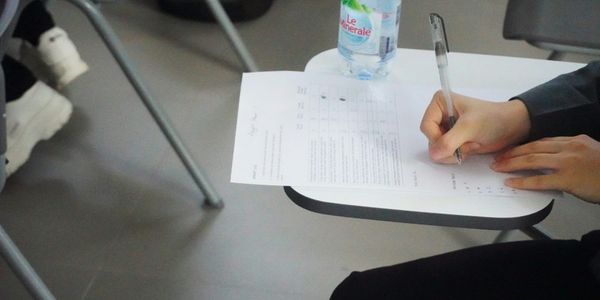
Question banks can feel like the centre of medical study. They are not. Here is what recall tools are genuinely for, what they leave out, and where to spend your scarcer hours.

AI in medical education
Most of a flight is flown by the autopilot, yet pilots train for the seconds when they must take back control and land the plane. Medicine is moving the same way. As AI takes on more of the routine work, the next generation of doctors will have to supervise it from day one, and that raises the bar.

AI in medical education
A study tool built for another country's health system does not simply travel. Medicines, guidelines, risk, communication, and the standard a student is held to are all local. Here is what localisation really means, and why smaller health systems need tools built with them, not for them.

AI in medical education
Search for an AI OSCE platform and every product sounds the same. What separates them is architecture, not features: whether the clinical content is grounded in a structured knowledge layer a clinician can stand behind, or improvised by a general model. Here is how to tell which is which.
AI in medical education
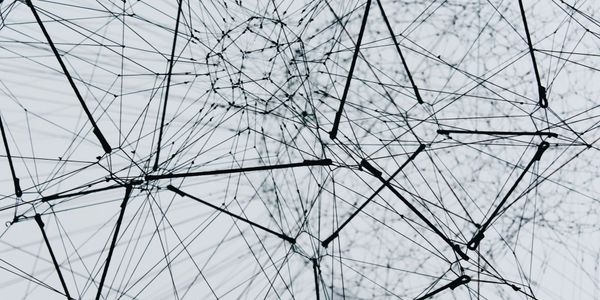
A senior clinician's instant read of a patient rests on a web of clinical knowledge no student can simply be handed. The Gestalt knowledge graph rebuilds that web in a form students can practise against, grounded in trusted clinical knowledge rather than generic AI.

AI in medical education
Medicine is probabilistic in how it reasons and deterministic in the rules that must never bend. A general-purpose LLM is the wrong fit for both, because its probability is ungrounded. Here is what a hybrid built on grounded reasoning, fixed rules, and language is meant to look like.

Clinical gestalt
ChatGPT can help medical students quickly access facts and test ideas. But clinical reasoning is built through supervised practice: learning the structure, forming differentials, choosing the next question, and working through uncertainty.

Clinical reasoning
Recall is what you know. Clinical reasoning is what you do with it when the data is incomplete and a patient is in front of you - and it's the part of medical school that's hardest to teach at scale.

Clinical reasoning
More medical students than at any point in history. The next risk isn't a doctor shortage. It's a skills shortage.